
How to Understand Aldehydes and Ketones in A-Level Chemistry
Aldehydes and ketones become much easier once you understand why the C=O bond is polar. This guide explains carbonyl bond polarity, nucleophilic addition and reduction using NaBH₄, with simple examples and links to alcohols and carboxylic acids. Ideal for OCR A-Level Chemistry students who want to understand the reactions rather than simply memorise them.
How to Improve Your Exam Technique in OCR A-Level Chemistry
Understand the Chemistry but still losing marks? Strong OCR A-Level Chemistry exam technique is about more than knowing the content. You must learn how to interpret command words, show calculation methods clearly, use mark schemes properly and identify the mistakes stopping you from reaching higher grades.
Bonding and Structure: Understanding How They Affect Physical Properties
Bonding and structure questions are rarely just about naming a force. To explain physical trends properly, you need to connect molecular structure to intermolecular forces and then to the energy needed to separate molecules. This skill becomes important across organic chemistry, shapes, isomerism and transition metal chemistry.
Why Aromatic Chemistry Is More Than Just Benzene Reactions
Aromatic chemistry is not just a list of benzene reactions to memorise. Questions on benzene and phenol test whether you understand electron density, electrophiles, mechanisms and why substituents change reactivity. Here is how to approach one of the most common comparison questions.
Why Moles Are the Foundation of A-Level Chemistry Calculations
Moles can feel like just another Year 12 calculation topic, but they quickly become the language behind much of A-Level Chemistry. Learn why mole calculations matter, how they connect to later topics, and how to approach a common hydrated salt exam-style question.

How to Study Smarter for A-Level Chemistry Exams
Preparing for A-Level Chemistry can feel overwhelming, but it doesn’t have to be. Whether you're aiming for an A* or just trying to boost your confidence, studying smarter (not harder) is the key. In this guide, I break down strategic revision tips for each major area: Organic Chemistry, Inorganic Chemistry, and Physical Chemistry.

Writing a Compelling Personal Statement for Chemistry (and other Natural Sciences)
Crafting a compelling personal statement is one of the most important steps in securing a place at a top university. Whether you're applying to Oxbridge, one of the Russell Group institutions, as a home student or as an international applicant, your statement needs to showcase not just your academic strengths, but your curiosity, resilience, and readiness to thrive in a rigorous scientific environment.
Best of Both Worlds: Why Hybrid Small Group Tuition Works for A-Level Chemistry
Hybrid small group tuition can give A-Level Chemistry students structure, expert teaching and the confidence that comes from learning with others. This guide explains when it works well and how it supports exam technique.

What to Do If Your Child Didn’t Get the GCSE Chemistry Grade They Hoped For
A disappointing GCSE Chemistry grade can feel worrying, especially if your child wants to study A-Level Chemistry. This guide explains what parents should do next, from speaking to school to rebuilding key foundations before September.

What to do if your child doesn’t get the A-Level Chemistry grade they hoped for
A disappointing A-Level Chemistry result can feel overwhelming. This guide helps parents support their child calmly, understand the options and decide whether Clearing, a review of marking, extra support or a resit is the right next step.

5 Important Factors to Consider When Choosing an A-Level Chemistry Tutor
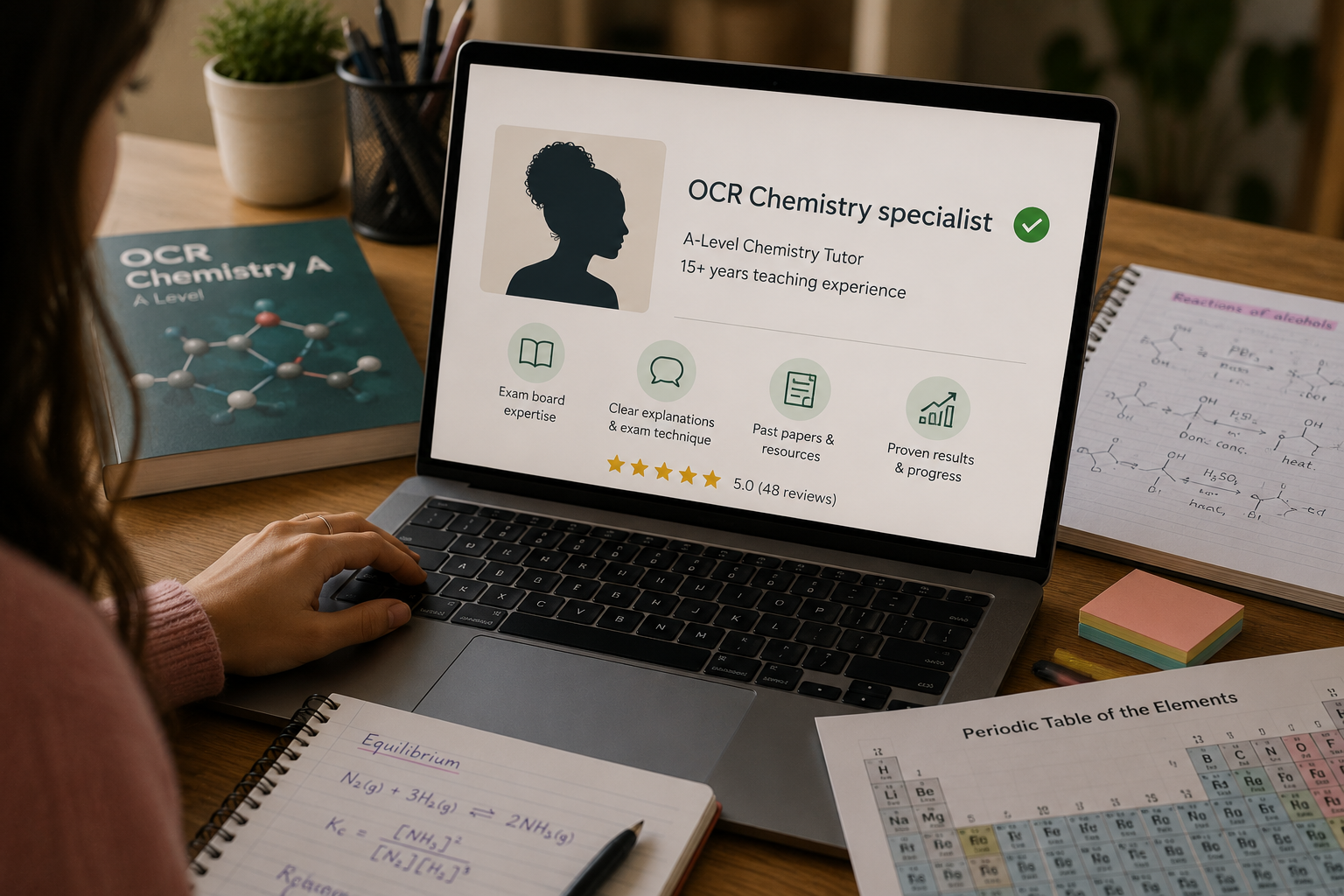
Choosing the right A-Level Chemistry tutor is about more than subject knowledge. This guide explains five important factors parents should consider, including exam board focus, exam technique, clear explanations and progress tracking.
Why You Should Choose a Chemistry Tutor Who Specialises in Your Child’s Exam Board
A tutor may know Chemistry, but do they know your child’s exam board inside and out? This guide explains why exam board-specific A-Level Chemistry tutoring matters and what parents should ask before choosing support.
Starting A-Level Chemistry in September: What Students Should Do Now
A-Level Chemistry starts quickly, and weak GCSE foundations can make the first term feel harder than it needs to be. This guide equips parents and students with a summer game plan before September and shows how parents can support without adding pressure.

Navigating the GCSE to A-Level Chemistry Jump
The jump from GCSE to A-Level Chemistry can feel overwhelming, even for students who did well at GCSE. This guide explains why the step up feels difficult, what examiners expect at A-Level, and how students can prepare before September.

Starting Year 13 A-Level Chemistry: How to Maintain Momentum After Year 12
Moving into Year 13 Chemistry is a major step. This guide explains how students can maintain momentum, close Year 12 gaps and build the exam technique needed for stronger final results.

Year 12 AS-Level Chemistry Mocks: What Your Child’s Result Really Tells You
Year 12 Chemistry mocks are not final judgments. They are very useful feedback. This guide explains what your child’s mock result really shows, why marks are often lost and how to use the result to build a stronger plan before Year 13.

What to Do After A-Level Chemistry Exams While Waiting for Results
Wondering what to do after A-Level Chemistry exams? Here’s how students and parents can manage the wait for results, avoid overthinking and prepare calmly for Results Day.
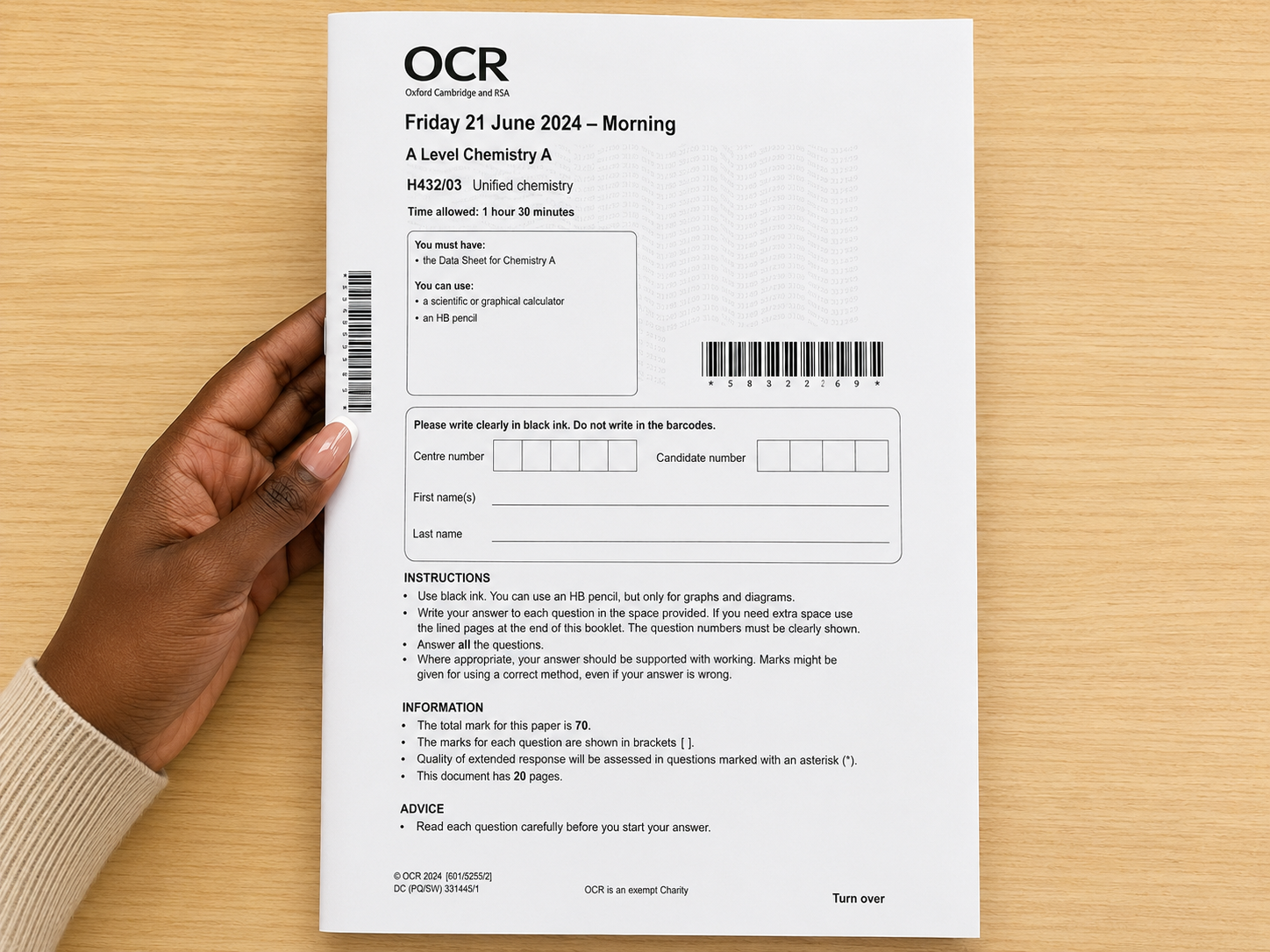
How to Prepare for OCR A-Level Chemistry Paper H432/03
OCR A-Level Chemistry Paper H432/03 can feel unpredictable because it brings the whole course together. This guide explains how to prepare for Paper 3 by focusing on mixed-topic practice, practical skills, graph interpretation, calculations and clear exam technique.
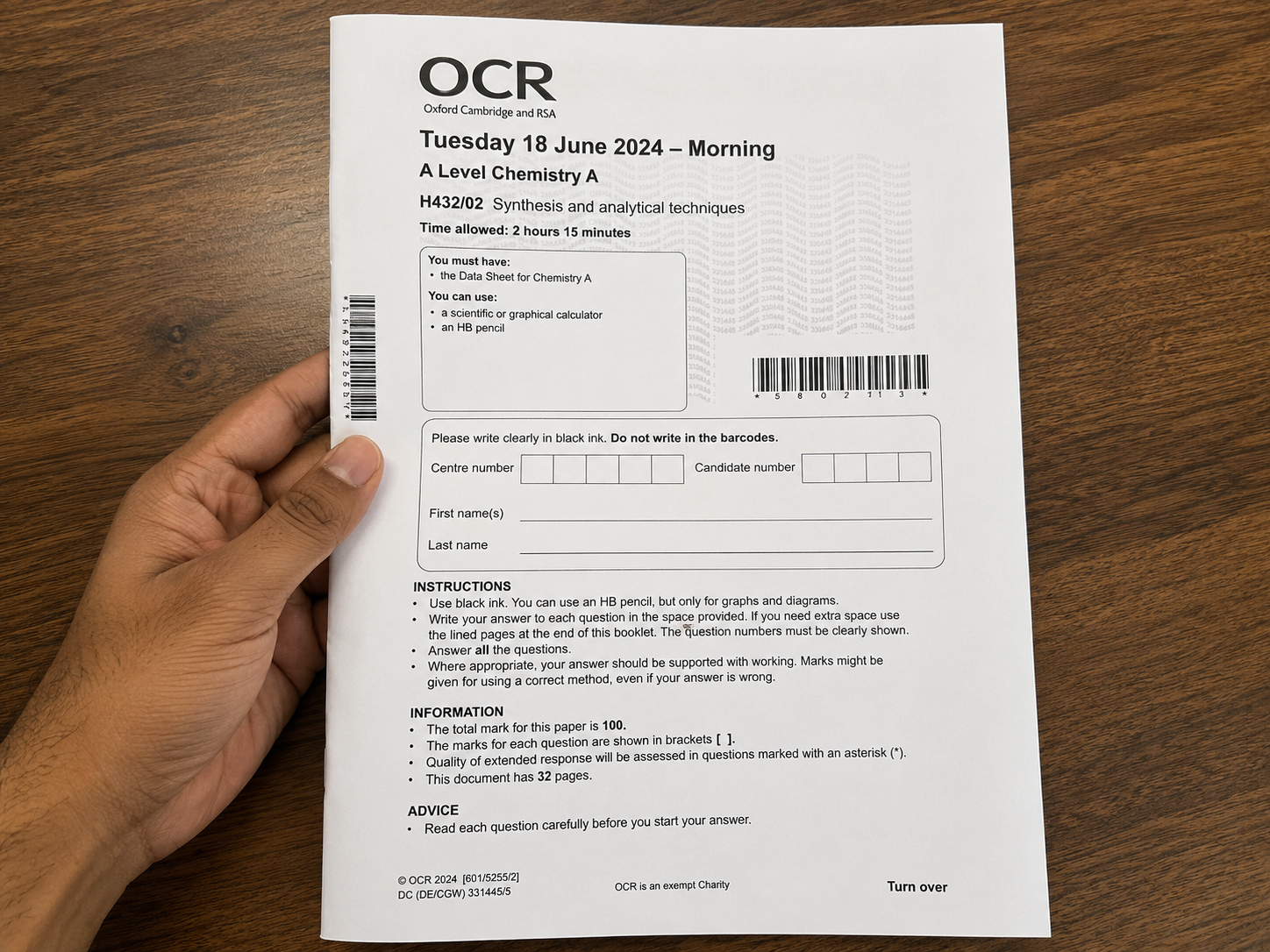
OCR A-Level Chemistry Paper H432/02: 6 Must-Know Topics That Maximise Marks
Many OCR A-Level Chemistry students revise topics in isolation. The reality is that certain topics underpin large sections of Paper 2 and often appear together in synthesis, mechanism and analysis questions. Master these six areas and you'll put yourself in a stronger position to pick up marks across the paper.
What To Do If Your A-Level Chemistry Paper 1 Exam Went Bad (And How to Recover Before Paper 2)
Paper 1 didn’t go how you hoped? Don’t panic. One bad A-Level Chemistry exam does not define your final grade.
In this article, you’ll learn exactly what to do in the 48 hours after a difficult paper, how to prepare effectively for Paper 2, and which revision mistakes to avoid. We’ll also cover how to find high-yield topics most likely to help you recover marks quickly, plus the exam strategies high-grade students use in the final stretch before exams.