Year 12 AS-Level Chemistry Mocks: What Your Child’s Result Really Tells You
Year 12 Chemistry mock results can trigger a lot of emotion.
Some students feel relieved. Others feel disappointed, embarrassed or worried that they are “not good at Chemistry”. Parents can feel unsure too. Does a low mock result mean their child cannot get the grade they need? Is it time to panic? Should they get help straight away?
The most useful way to view a Year 12 Chemistry mock is this:
It is not a final judgment. It is feedback.
A mock result shows what is currently working, what needs attention and what a clear plan should look like before Year 13 begins.
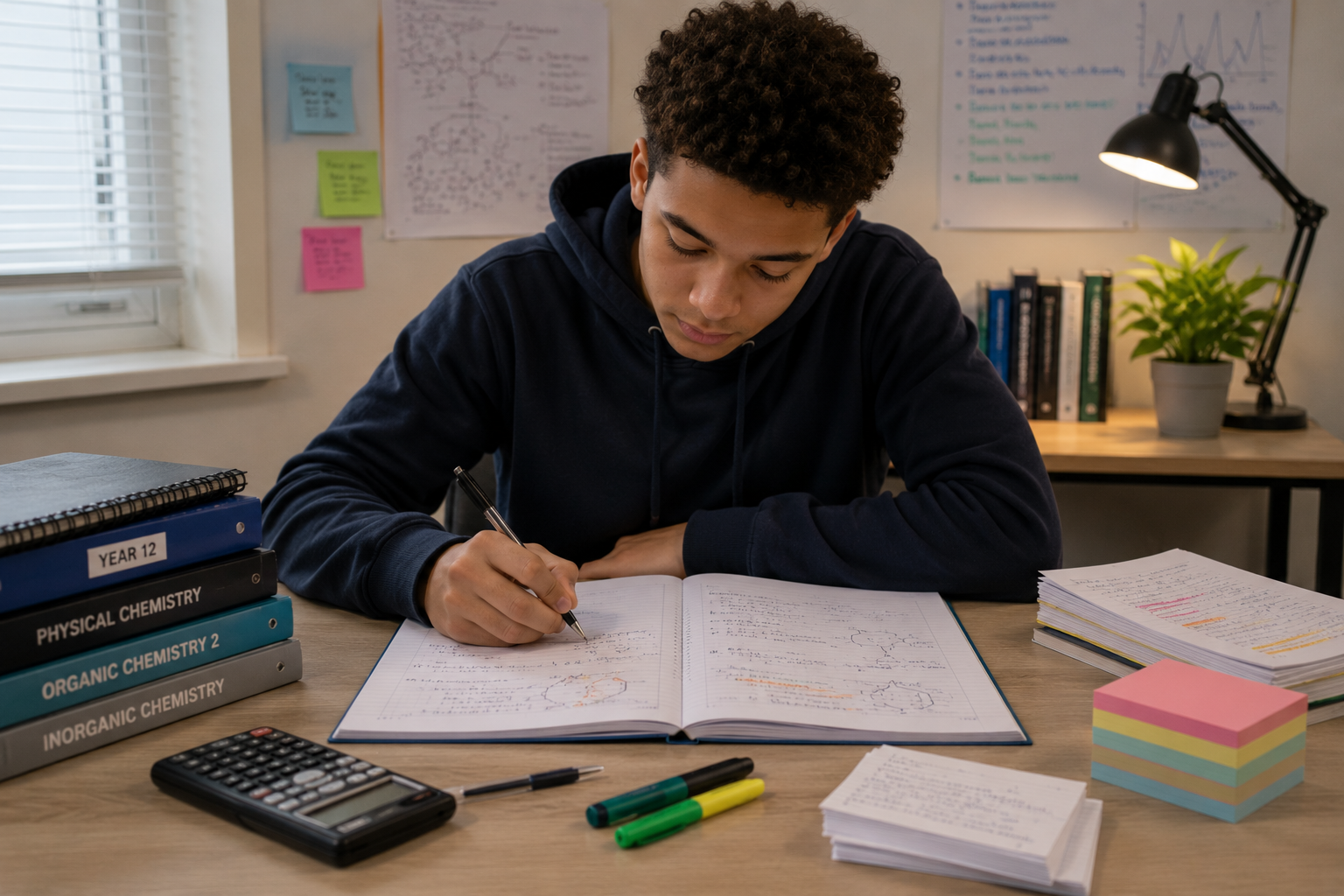
A low mock result does not mean your child cannot improve
Year 12 Chemistry is a big adjustment from GCSE. Students are expected to handle more content, deeper explanations, unfamiliar questions and multi-step calculations.
Many students understand parts of the course but lose marks because their answers are not precise enough.
A disappointing mock result may point to:
- gaps in core content
- weak mole calculations
- poor exam timing
- vague written answers
- not showing enough working
- difficulty applying knowledge to unfamiliar questions
- lack of confidence under timed conditions
Each of these can be improved with the right plan.
Look beyond the grade
The grade matters, but the mark breakdown matters more.
Ask your child to go through the paper and label every lost mark. Was it a knowledge gap, calculation mistake, command word error, missed unit, weak explanation or timing issue?
This turns the mock from something emotional into something practical.
For example, a student who loses marks because they forget definitions needs a different plan from a student who loses marks because they cannot structure calculations clearly.
What your child can do to improve their exam technique
A-Level Chemistry examiners are not only checking whether students “know the topic”. They are checking whether students can apply it clearly and accurately.
That means students need to:
- use correct scientific language
- show full calculation methods
- include units and significant figures
- answer the command word
- link explanations to the information in the question
- avoid vague statements like “it has stronger forces” without saying which forces and why
This is why students often say, “I understood it, but I still lost marks.”
Understanding is the starting point. Exam technique is what turns that understanding into marks.
What should your child do next?
After Year 12 AS mocks, your child should not simply “revise harder”. They need to revise more carefully.
If you want your child to maintain momentum as they move into year 13, a good next step is to make a three-part list:
1. Topics I understand well
2. Topics I partly understand
3. Topics I avoid or get wrong often
Then start with the topics that appear across the course, such as amount of substance, bonding, enthalpy, redox, rates and organic mechanisms.
Final tutor insight
A Year 12 mock is valuable because it gives your child time. Time to close gaps, improve exam technique and start Year 13 with a clearer plan.
If your child is moving into Year 13 and wants to revise more strategically, my free 5 Most Examined A-Level Chemistry Topics guide is a useful place to start. It shows high-value topics, common mistakes and model A/A* style answers so students can see what stronger responses look like.
FAQs
-
A Year 12 Chemistry mock result shows how well your child is currently understanding and applying the course. It also highlights gaps in content, exam technique, timing and confidence before Year 13 begins.
-
A low mock grade is not ideal, but it is not the final result. The important thing is to identify why marks were lost and create a clear plan before Year 13 begins so they start off on a strong footing.
-
Absolutely. Students can improve significantly if they use their mock results properly. Improvement usually comes from fixing weak topics, practising exam questions regularly and learning how to write answers that match the mark scheme. Good support and consistency are vital.
-
Students should prioritise those topics that were weak points that usually come out in A-Level exams ever year. Drafting a personalised error log of where your child went wrong in the mocks is the first place to start.
-
Parents can help by staying calm, encouraging their child to review the paper carefully and helping them get support early if the same mistakes keep appearing.